About Gel Electrophoresis
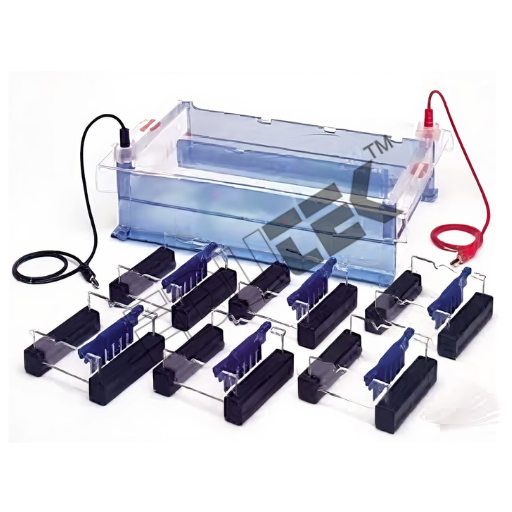
GEL ELECTROPHORESIS:Gel Electrophoresis is made out of thick perspex sheet with fixed upper and lower buffer tanks with 1 comb, 3 spacers, 1 plain glass plate, 1 notched glass plate, clamps electrode terminals & platinum electrodes of 99. 9% purity.
High Sample ThroughputDesigned for productivity, this gel electrophoresis system can process up to 25 samples in a single run. The spacious gel tray accommodates standard 10 x 7 cm gels, making it ideal for research laboratories requiring medium- to high-throughput analyses of nucleic acids or proteins.
Versatility across ApplicationsUse the apparatus for both DNA/RNA and protein separation. It supports agarose and polyacrylamide gels and is compatible with common buffer systems like TAE and TBE. The UV-transparent tray allows seamless visualization and documentation directly after electrophoresis.
Built-In Safety and DurabilityThe system comes equipped with a robust acrylic body, fitted interlocking safety lid, and removable platinum electrodes to ensure safe and reliable operation. Its leak-proof design and temperature resistance up to 60C provide lasting performance under routine laboratory conditions.
FAQs of Gel Electrophoresis:
Q: How do I set up the gel electrophoresis system for an experiment?
A: Begin by preparing your agarose or polyacrylamide gel and placing it on the UV-transparent gel tray. Fill the chamber with approximately 300 ml of TAE or TBE buffer until the gel is fully submerged. Insert the removable platinum electrodes and close the acrylic safety-interlock lid before connecting the system to an external power supply.
Q: What sample capacity does this electrophoresis unit offer per run?
A: The system can accommodate up to 25 samples per electrophoresis run, facilitating analysis of multiple DNA, RNA, or protein samples simultaneously.
Q: When should I use this apparatus instead of other electrophoresis systems?
A: Choose this horizontal system for routine analysis of DNA, RNA, or proteins in agarose or polyacrylamide gels, especially when sample throughput, quick setup, and UV gel visualization are needed. Its suitable for academic, research, and clinical labs.
Q: Where should the system be operated for optimal results and safety?
A: Always use the apparatus in a well-ventilated laboratory environment on a stable, flat surface. Ensure the power supply is nearby but protected from accidental spills, and only operate with the safety-interlocked lid in place.
Q: What is the process for visualizing results after electrophoresis?
A: Once the run is complete, remove the interlock lid and take the UV-transparent gel tray for direct visualization of separated nucleic acids or proteins using a UV transilluminator, making it easy to document results without risk of sample loss.
Q: How does the removable electrode feature benefit routine maintenance?
A: Removable platinum electrodes are easily taken out for cleaning or replacement, enhancing longevity and ensuring consistent, reproducible electrical conductivity for each experiment.
Q: What safety features are integrated into the design?
A: The acrylic lid features an interlocking mechanism that prevents operation when not securely closed, minimizing exposure to electrical currents and buffer fumes. The robust build and leak-proof design add layers of safety during use.






 Send Inquiry
 Send Inquiry

